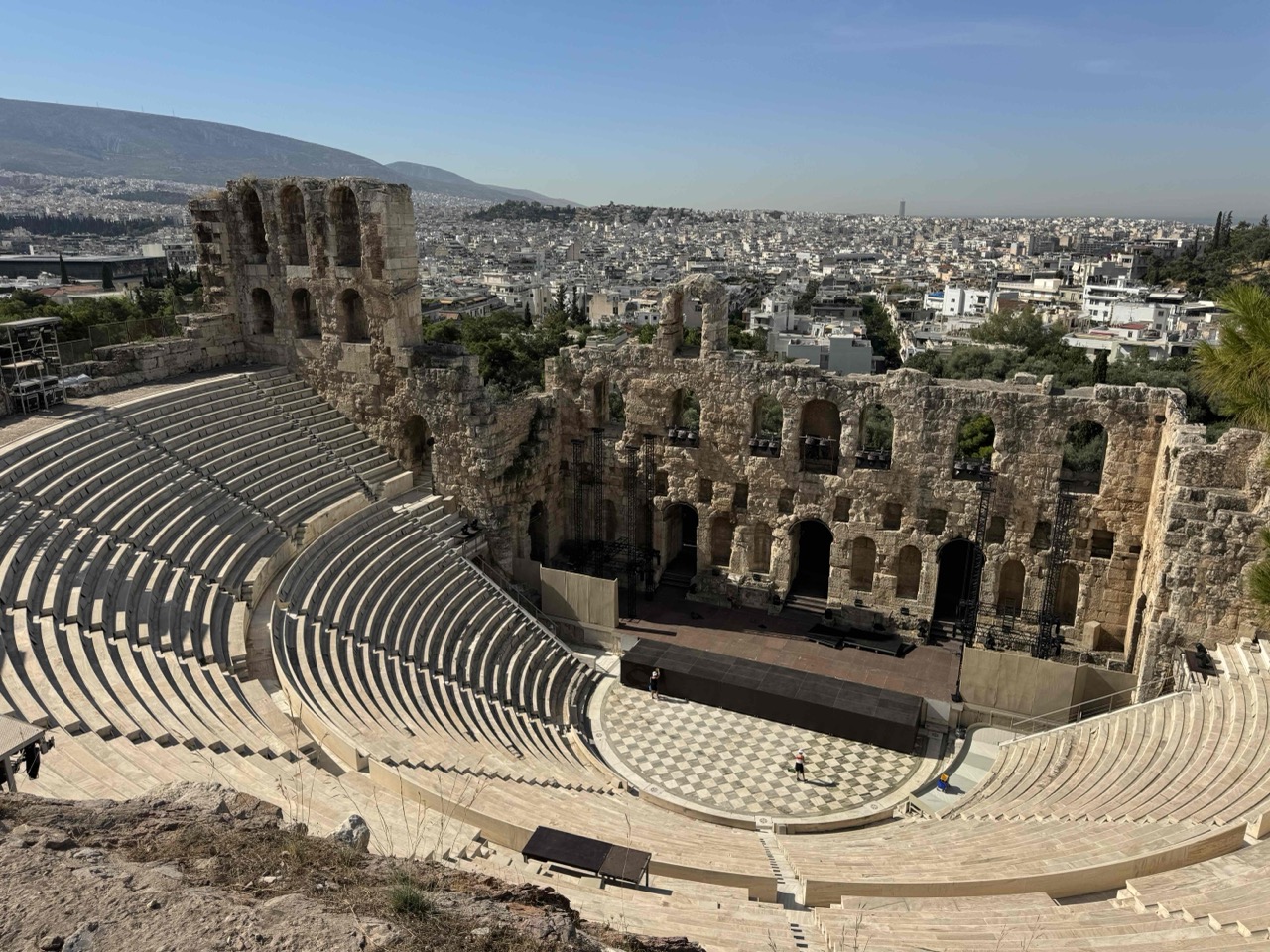
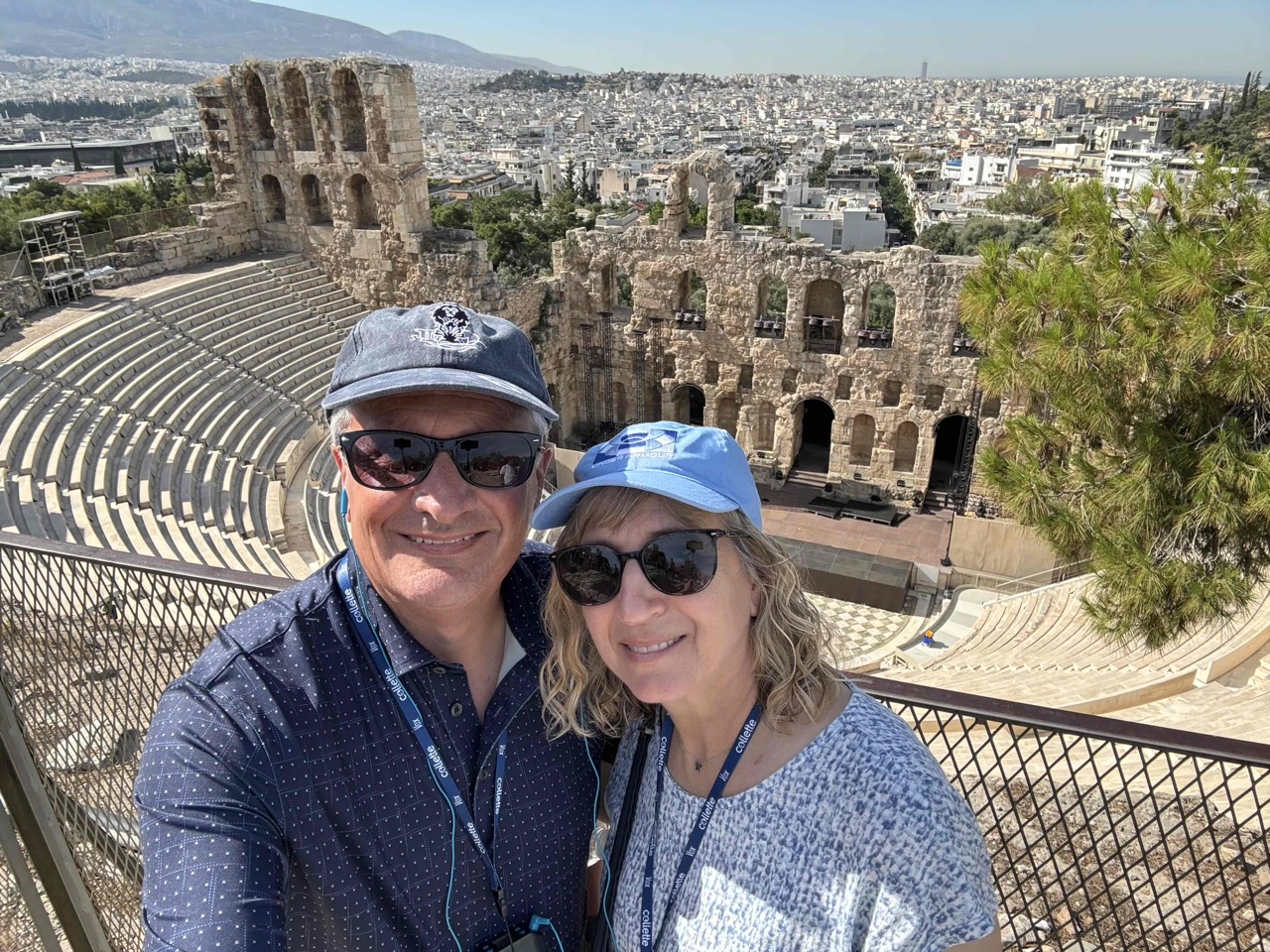
The Acropolis
Greece • June 16, 2026 • Day 6 of 16
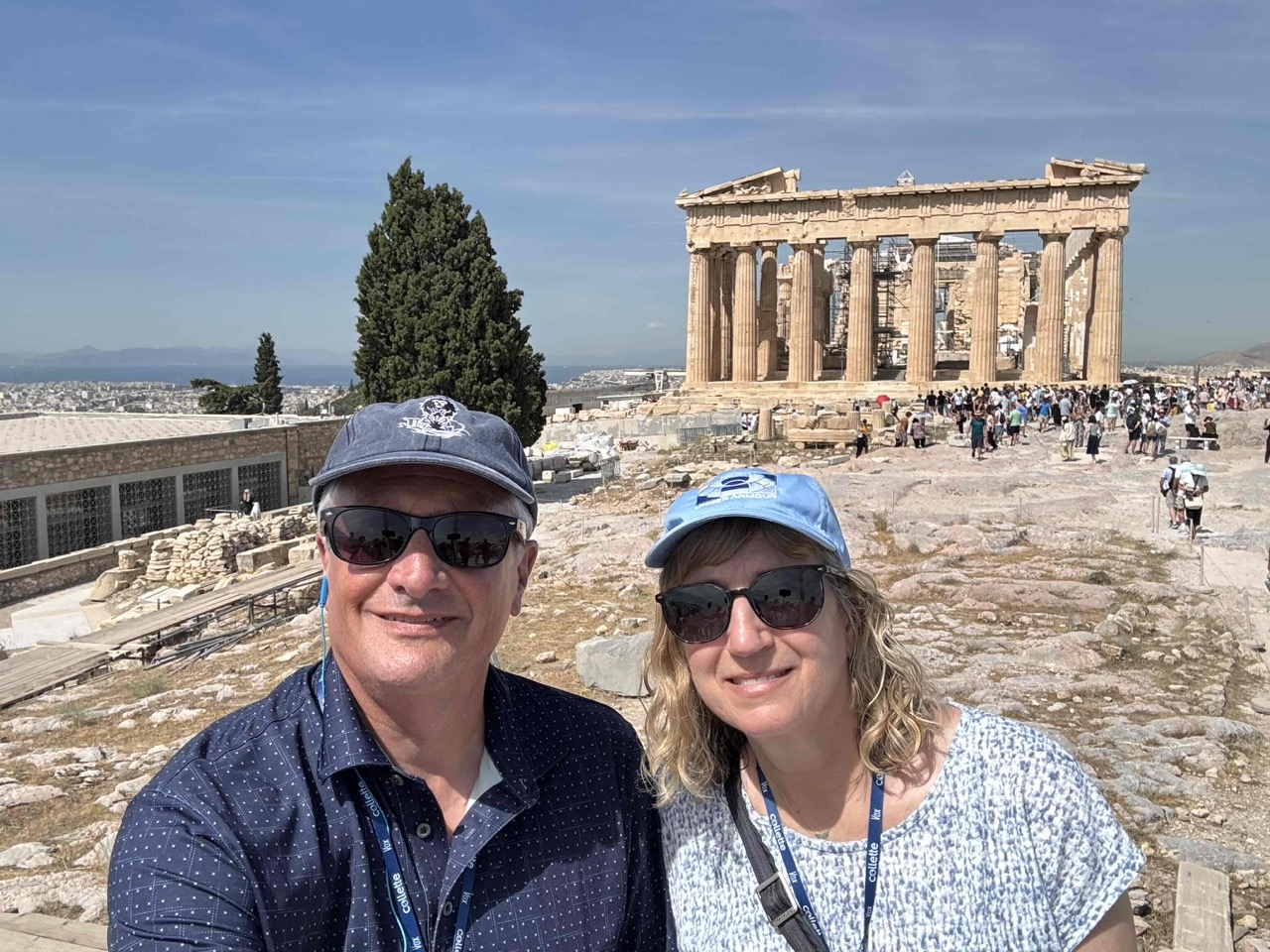
We met Yota and drove to the Acropolis. She told us the story of Zeus and Athena along the way.
Story of Cronos, Zeus and Athena
Cronus (Zeus' father) learned from Gaia and Uranus that he was destined to be overcome by his own children, just as he had overthrown his father. As a result, although he sired the gods Demeter, Hestia, Hera, Hades, and Poseidon by Rhea, he devoured them all as soon as they were born to prevent the prophecy. But don't forget that the Greek Gods are immortal. When the sixth child, Zeus, was born, Rhea sought Gaia to devise a plan to save them and to eventually get retribution on Cronus for his acts against his father and children.
Rhea secretly gave birth to Zeus in Crete, and handed Cronus a stone wrapped in swaddling clothes, also known as the Omphalos Stone, which he promptly swallowed, thinking that it was his son. Once Zeus had grown up, Cronus was forced to regurgitate his children through Gaia's cunning and Zeus's might. Cronus disgorged first the stone that he had swallowed instead of Zeus, followed by Zeus's siblings.
After taking the throne on Earth, Zeus didn't want to repeat the sins of his father, so he challenged his wife Metis to see if she could take a different form. She took the form of a fly, and while she was pregnant with Athena, he swallowed her. Then he got a massive headache and convinced Prometheus to crack his head open. Zeus then gave birth to Athena—fully arrayed in the arms of war—from his head. She is also known as the God of Knowledge.
Athens Naming
Why is this important you might ask? The Greek goddess of wisdom Athena and her uncle (god of the sea) Poseidon fought over protecting and naming their favorite city. So, they decided to put themselves into a competition. They called all the other Olympian gods to gather at Acropolis.
The two were challenged based on the gifts they would give to the people. Poseidon hit his trident at the rocks and salt water came out. He said that if he won, he would make the water drinkable.
Athena planted an olive tree at the rocks with lots of olives. She said that would feed the people forever.
Zeus tells the other gods and Cecrops to decide. The king of Athens (Cecrops) saw that there already was salt water from the sea around the city and all over the country, so he decided that the olive tree was more useful for his citizens. The city of Cecropia then renamed into Αθήνα-Athena in order to honor the goddess Αθηνά-Athena.
Two Gifts to the World
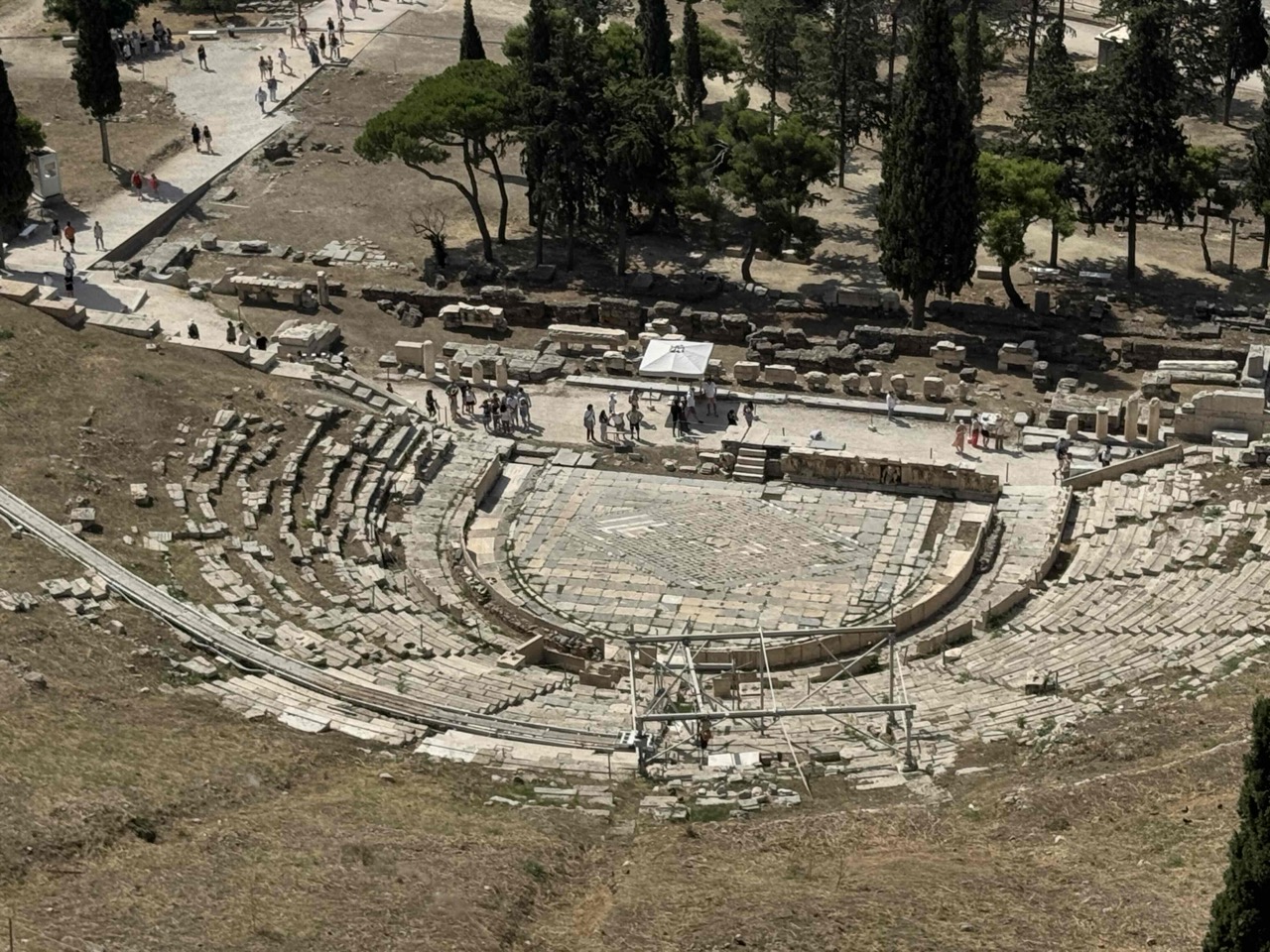
The Greeks take great pride in telling people that their biggest contributions to the world were democracy (starting in 508 BC) and theater, starting in 534 BC. Thespis was the very first actor, bringing dramatic dialogue to the festivals of Dionysus
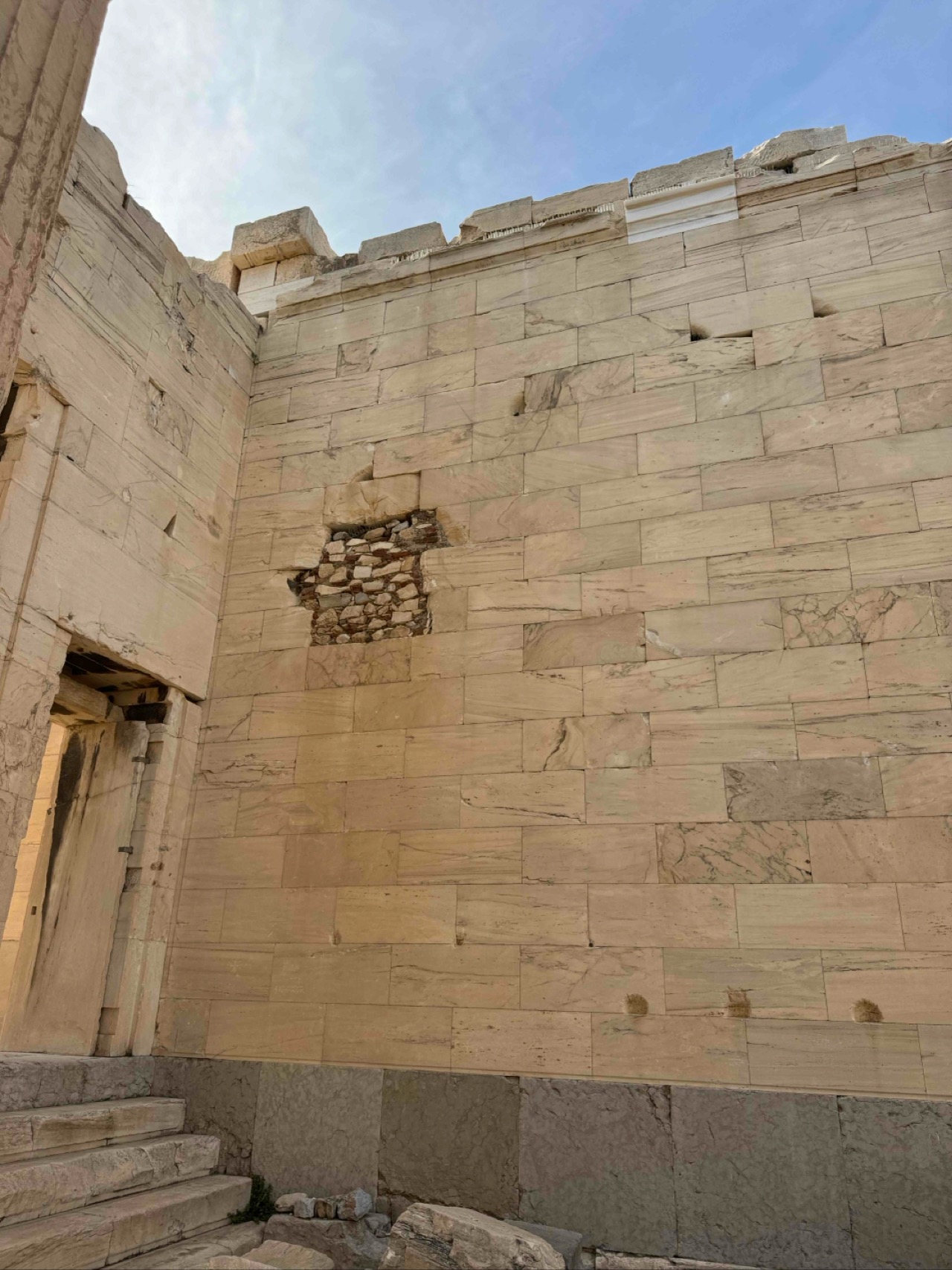
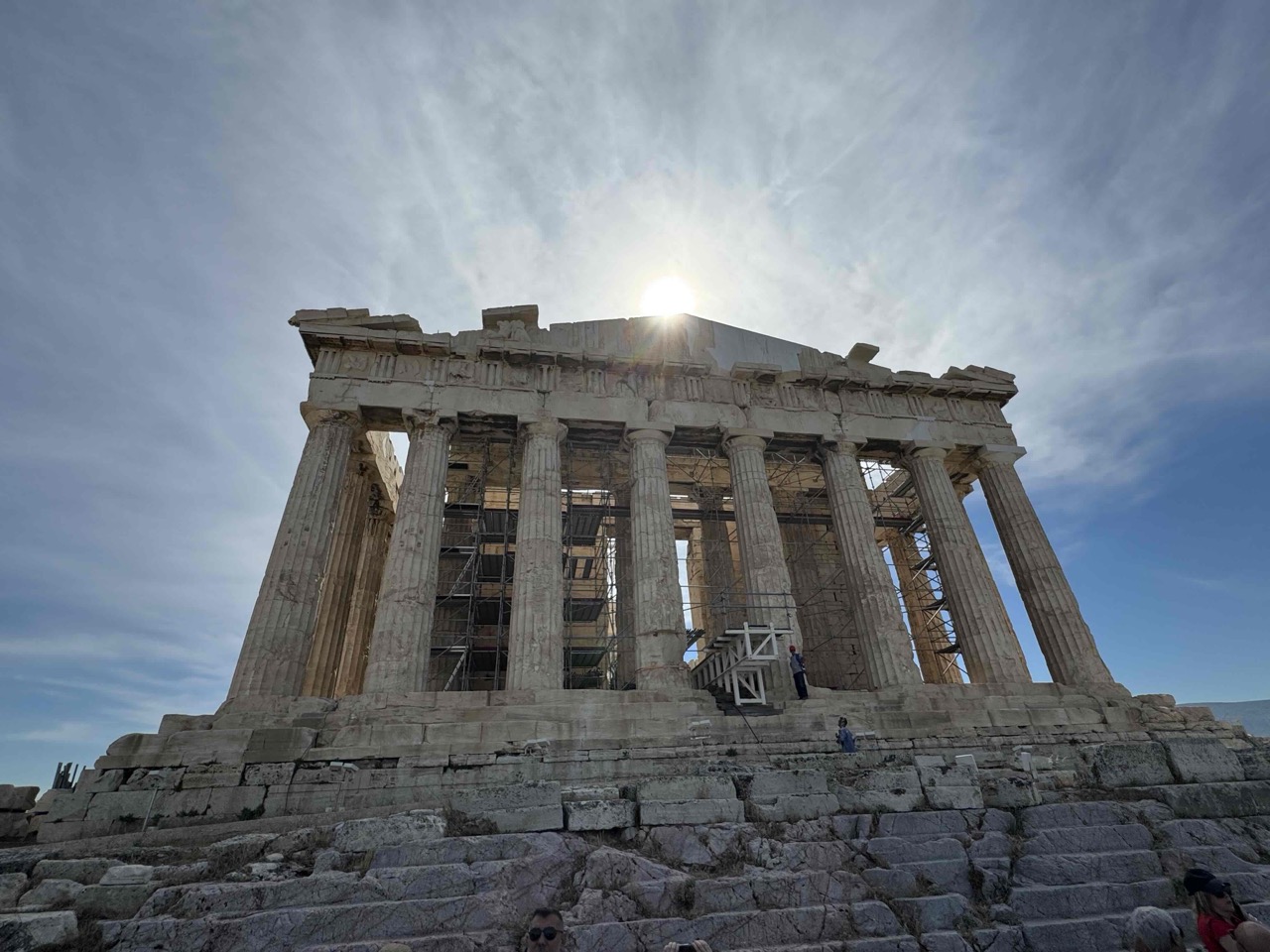
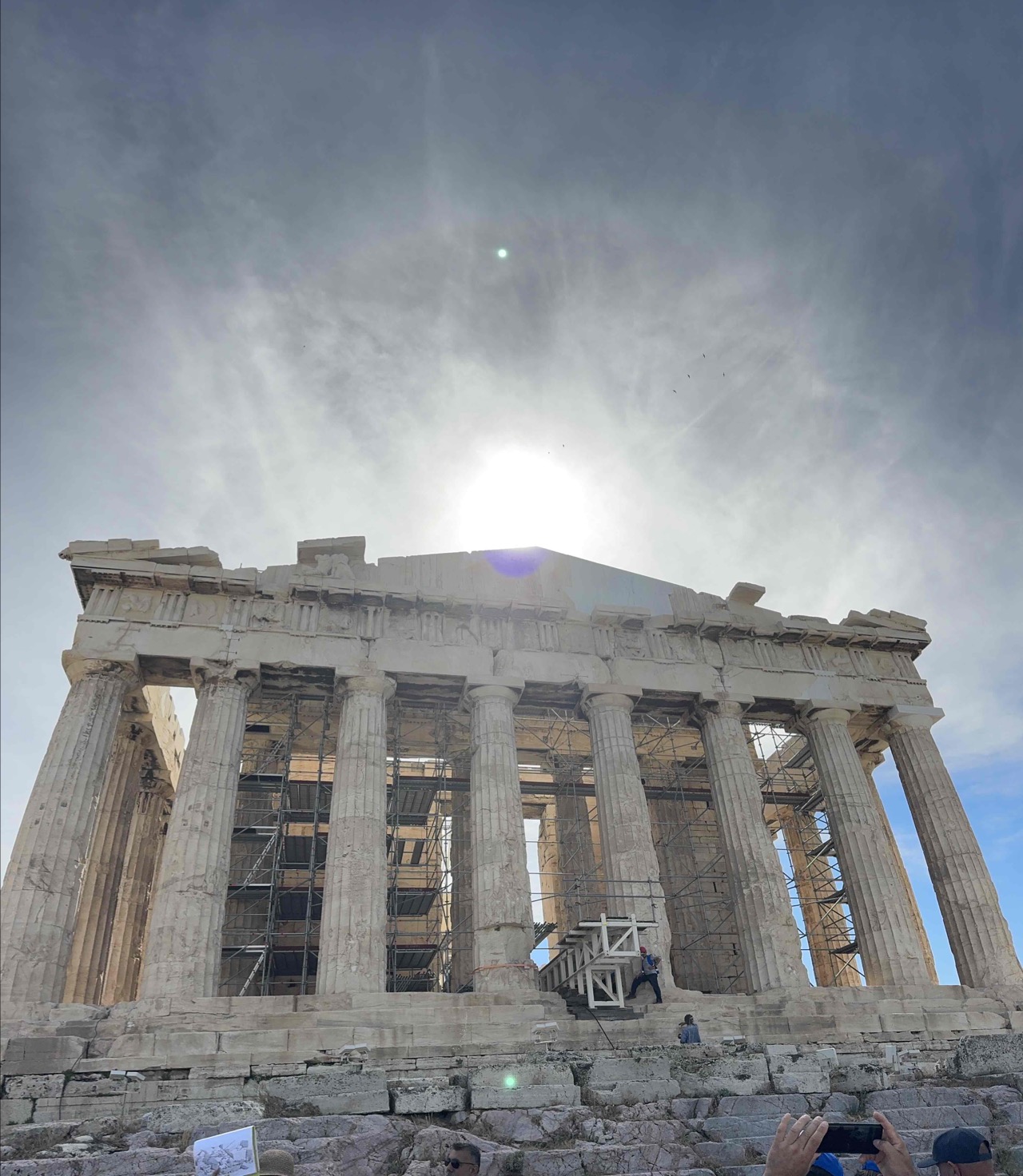
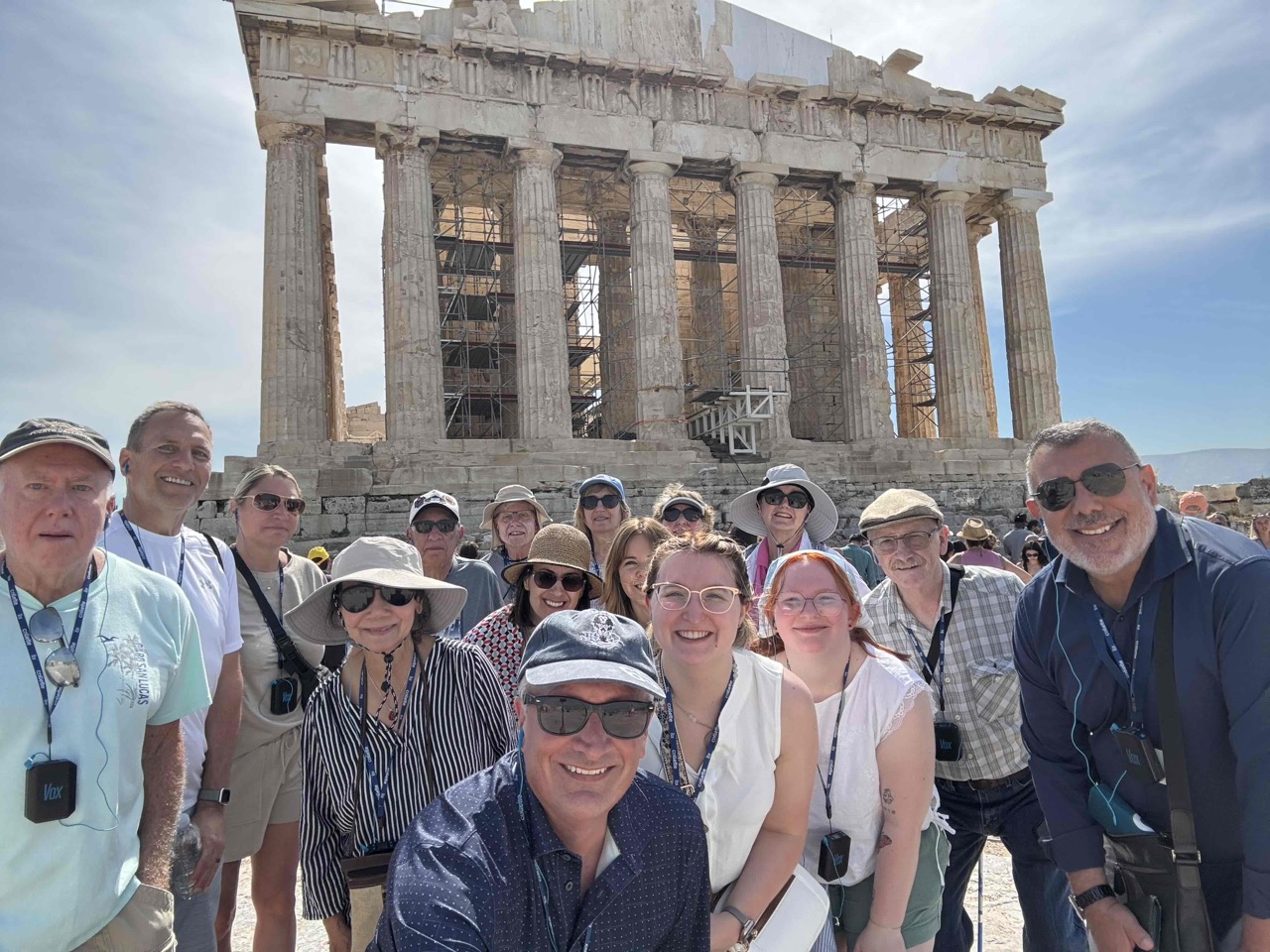
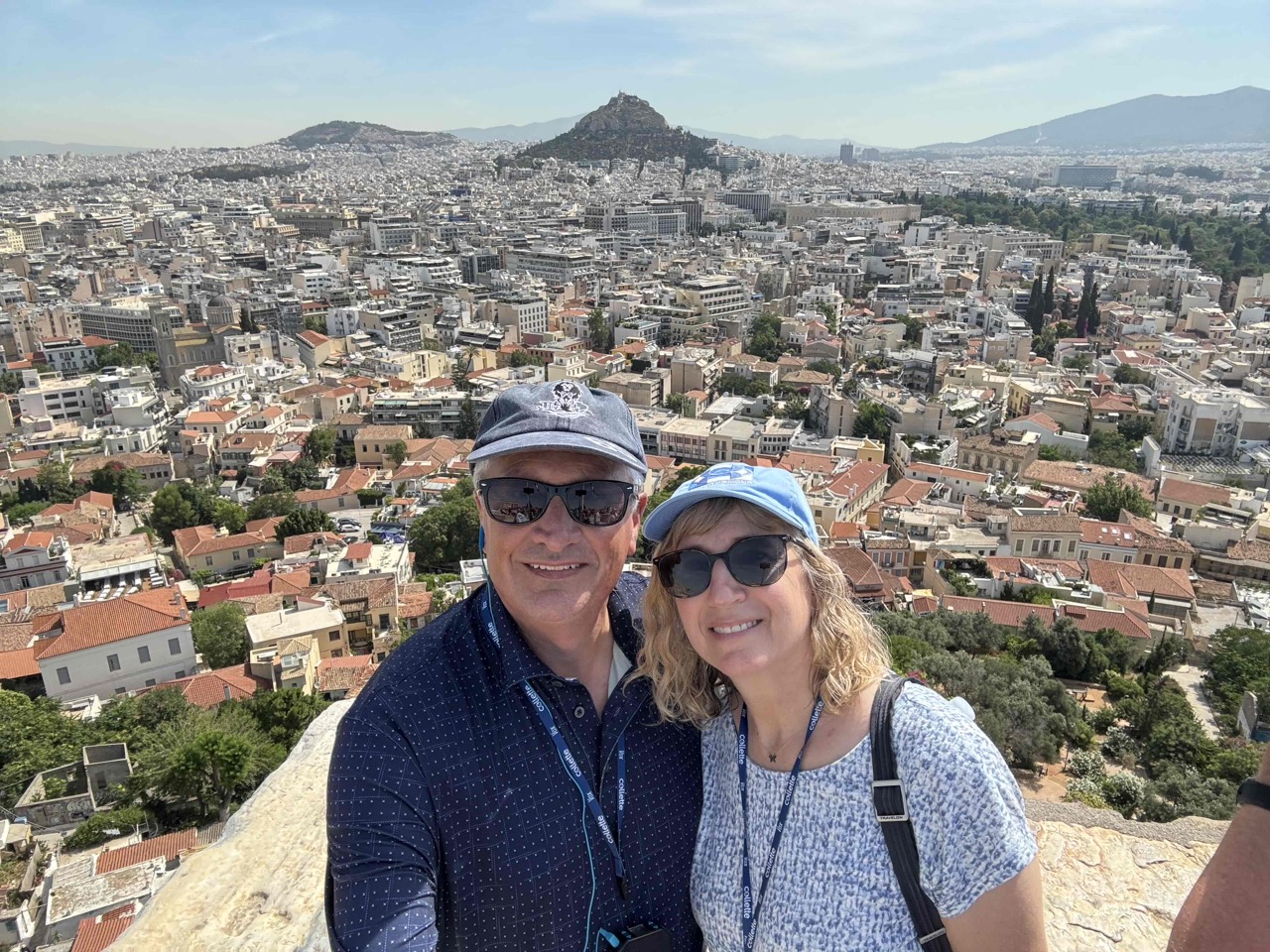
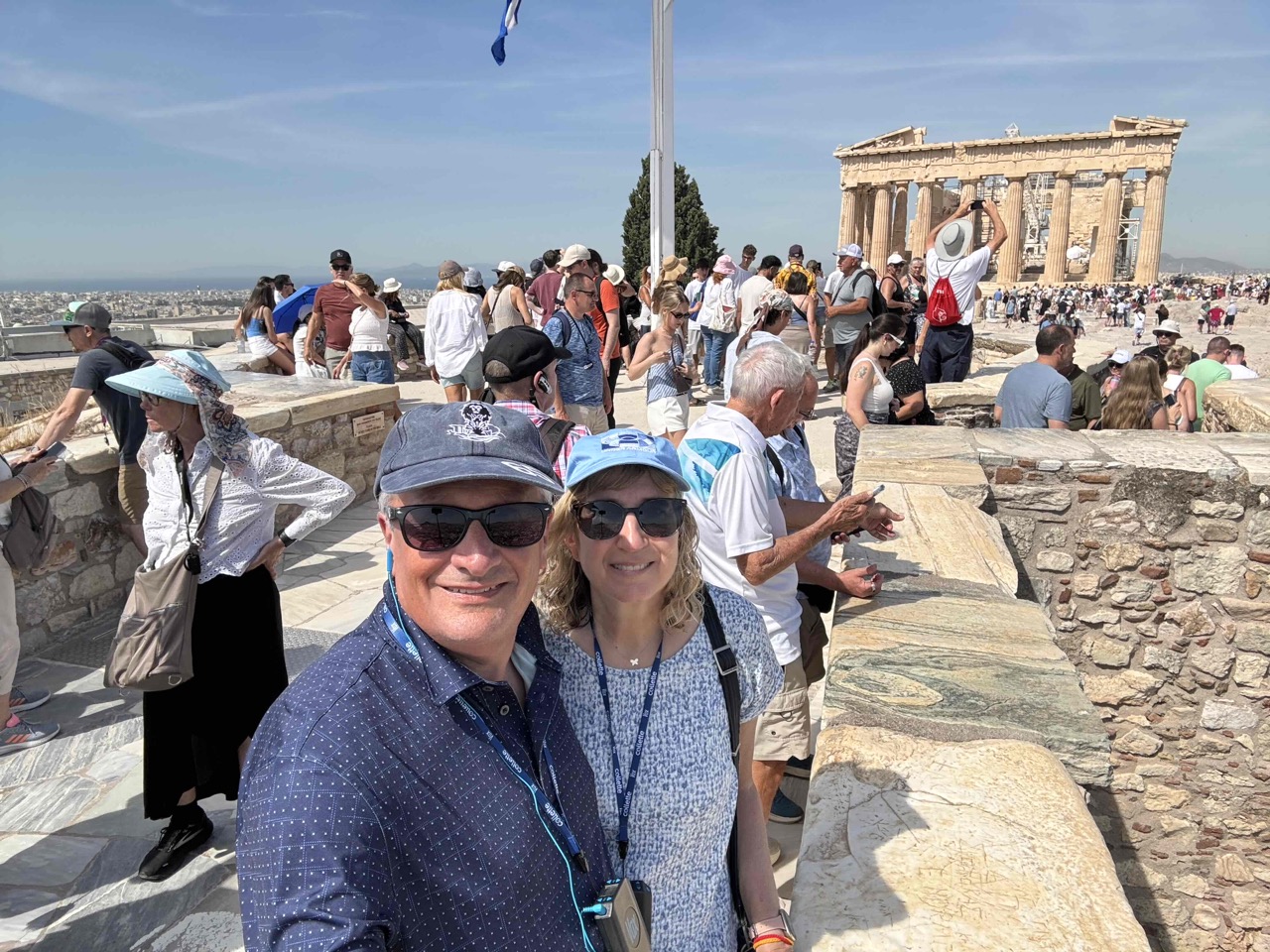
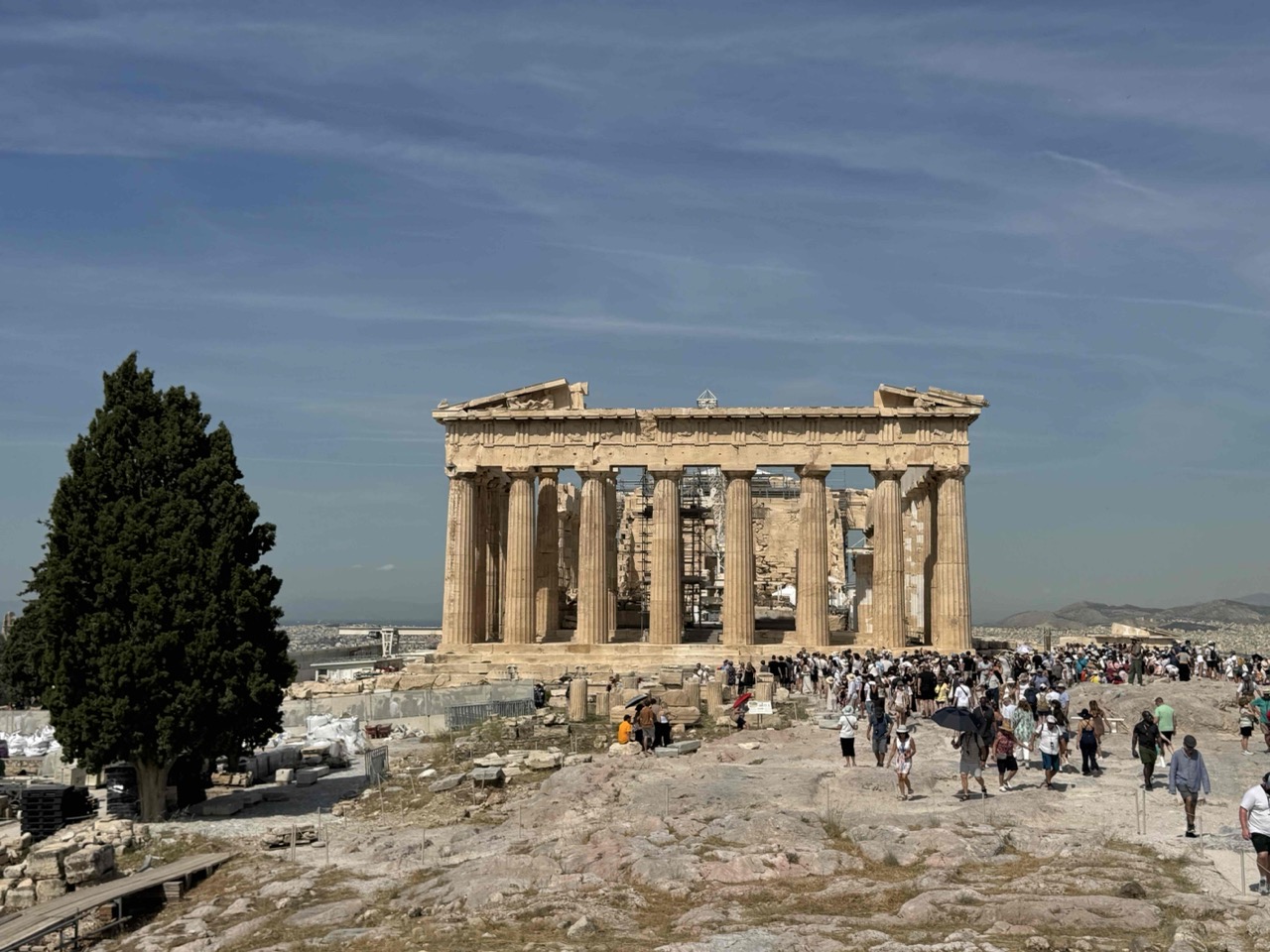
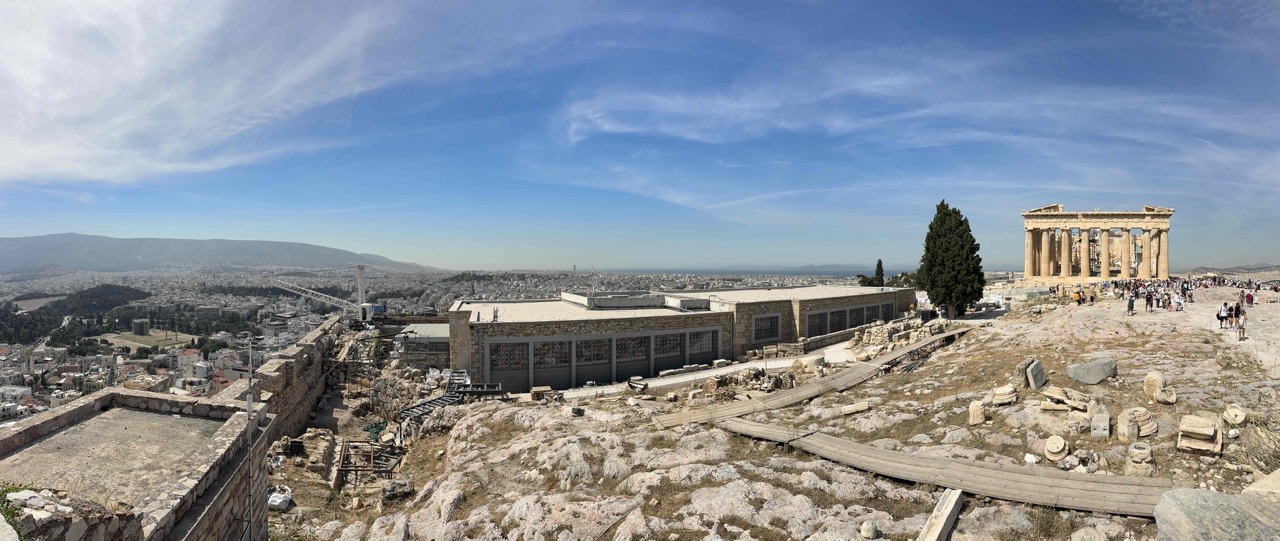
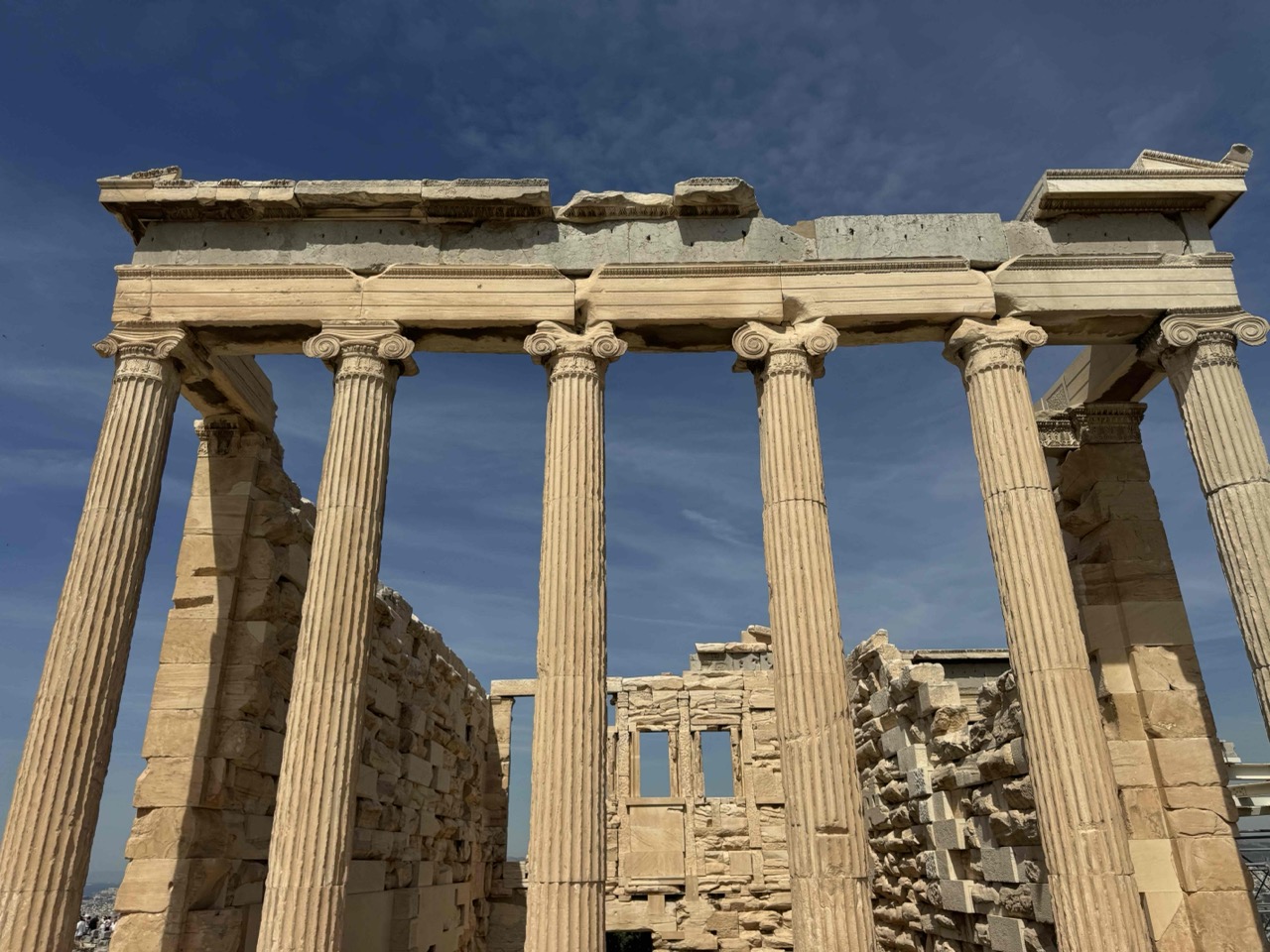
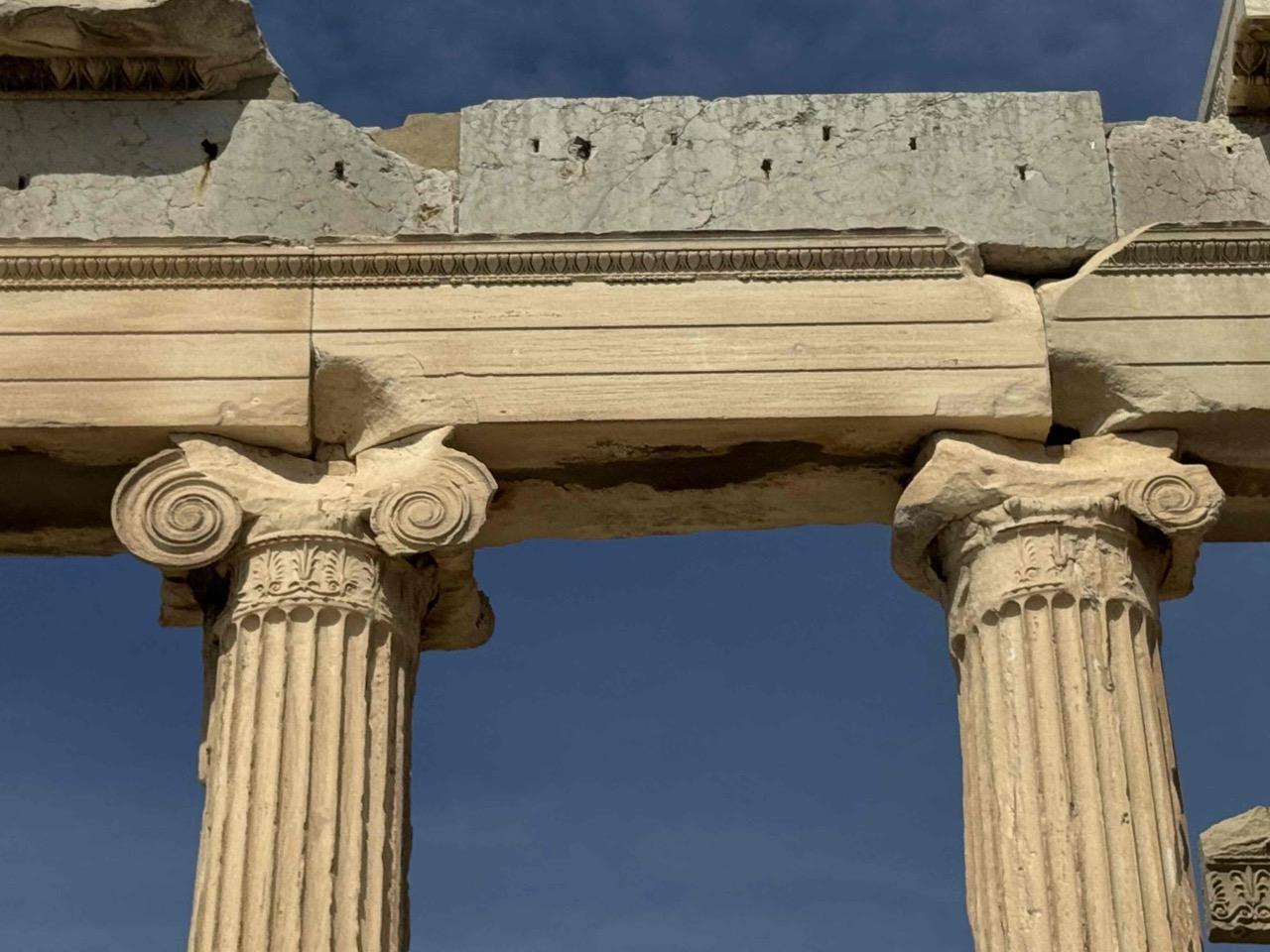
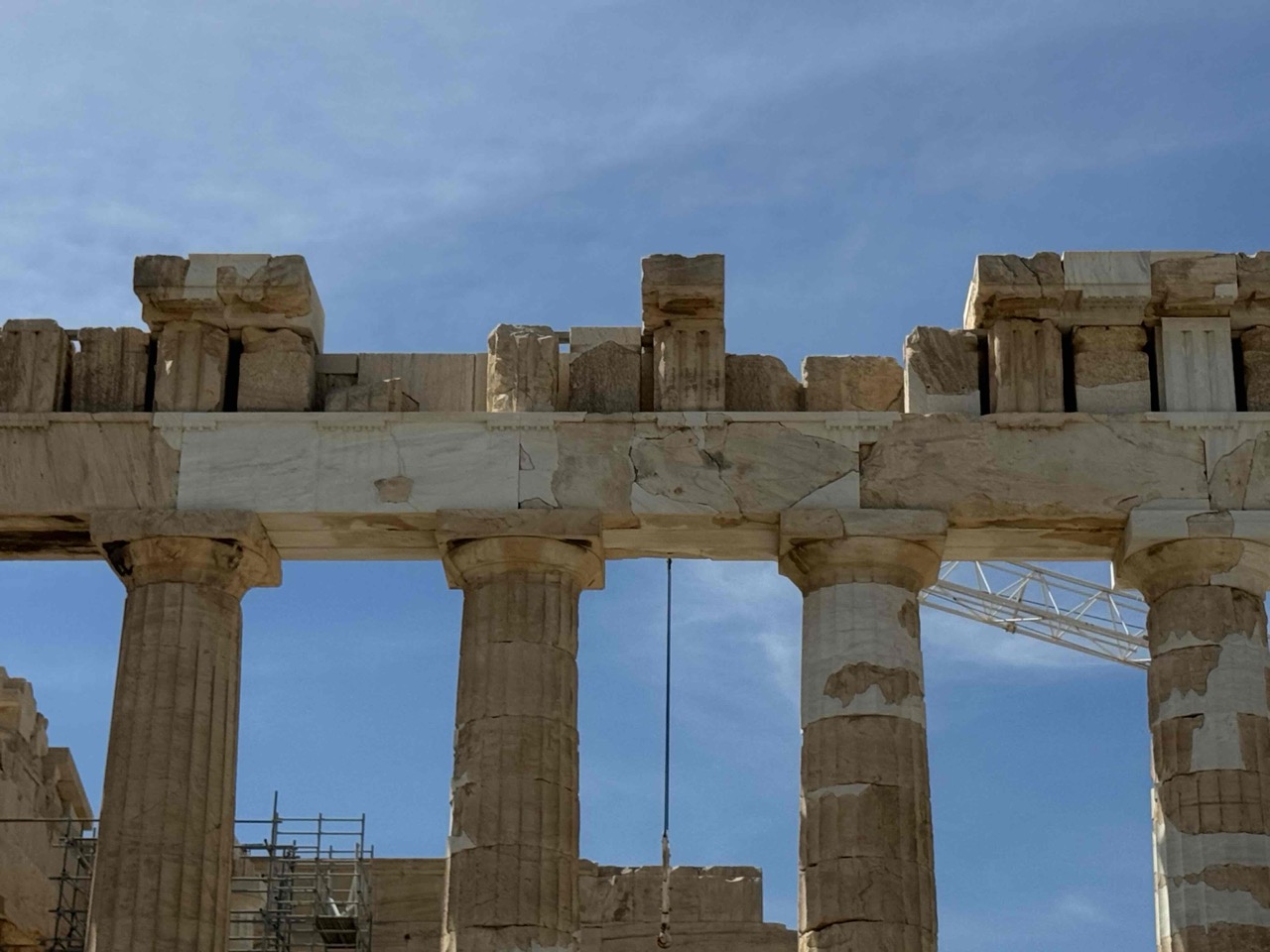
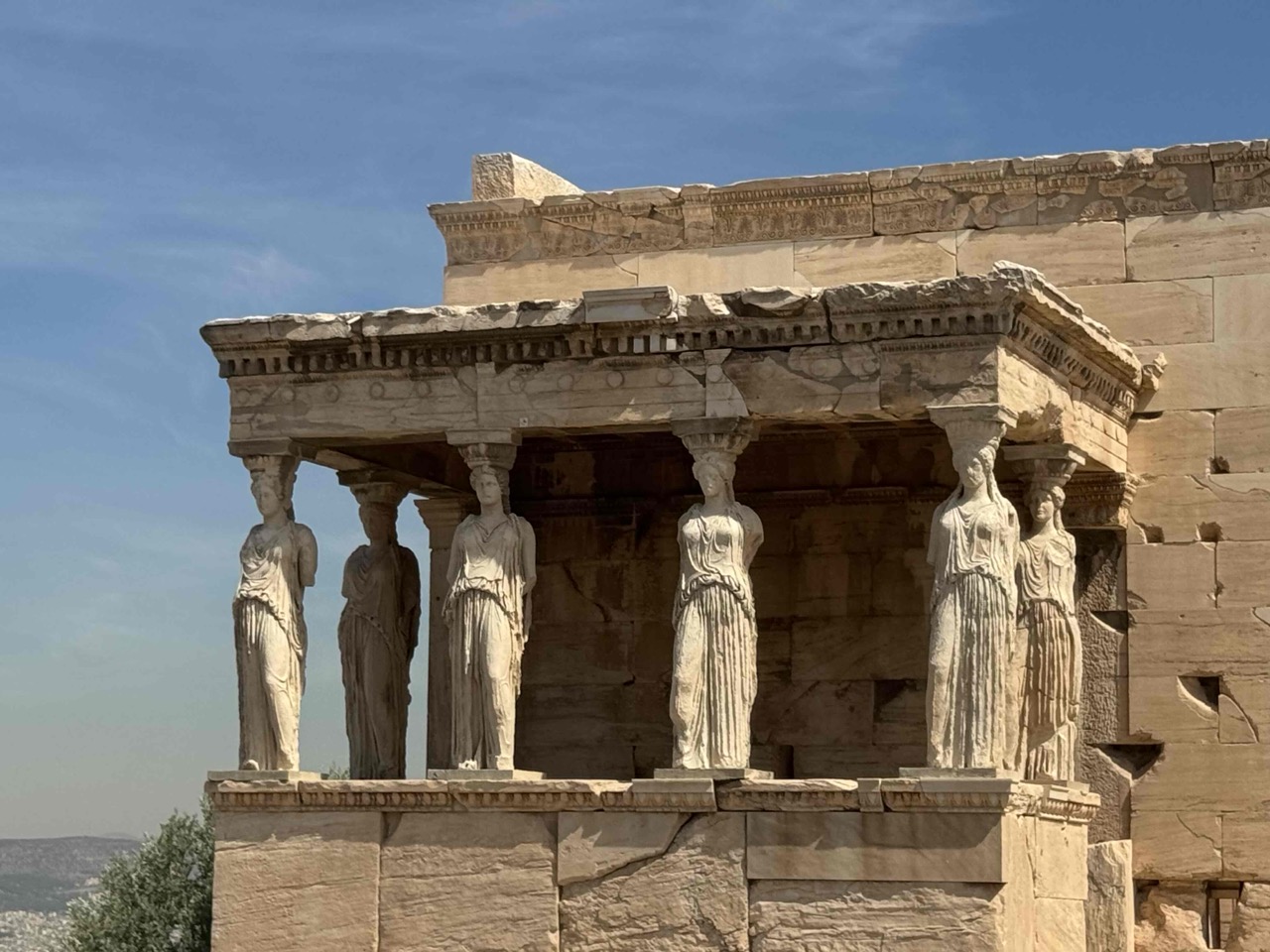
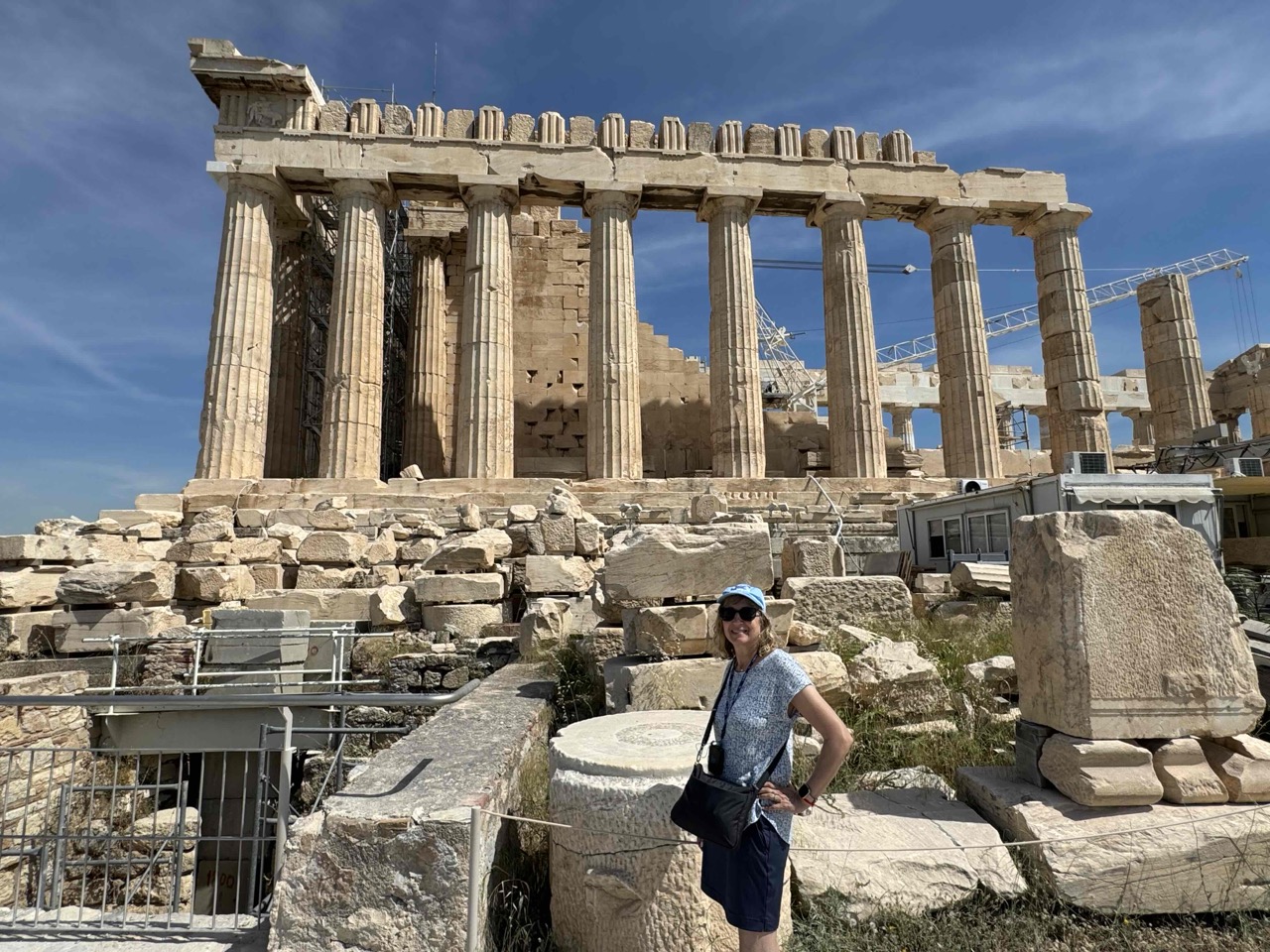
With these stories/myths complete, we then walked up to the Acropolis. The views were spectacular. Much of the marble came from 11 miles away, and the Greeks ingeniously came up with a pulley system (drawn by animals) to place the stones onto the columns. The horizontal stones weigh as much as 10 tons each and were placed atop the columns by the earliest versions of cranes.
It only took 15 years for the Parthenon to be constructed by the Greeks, but after multiple destructions and earthquakes, it has been under reconstruction for years and will take almost 50 years to complete.
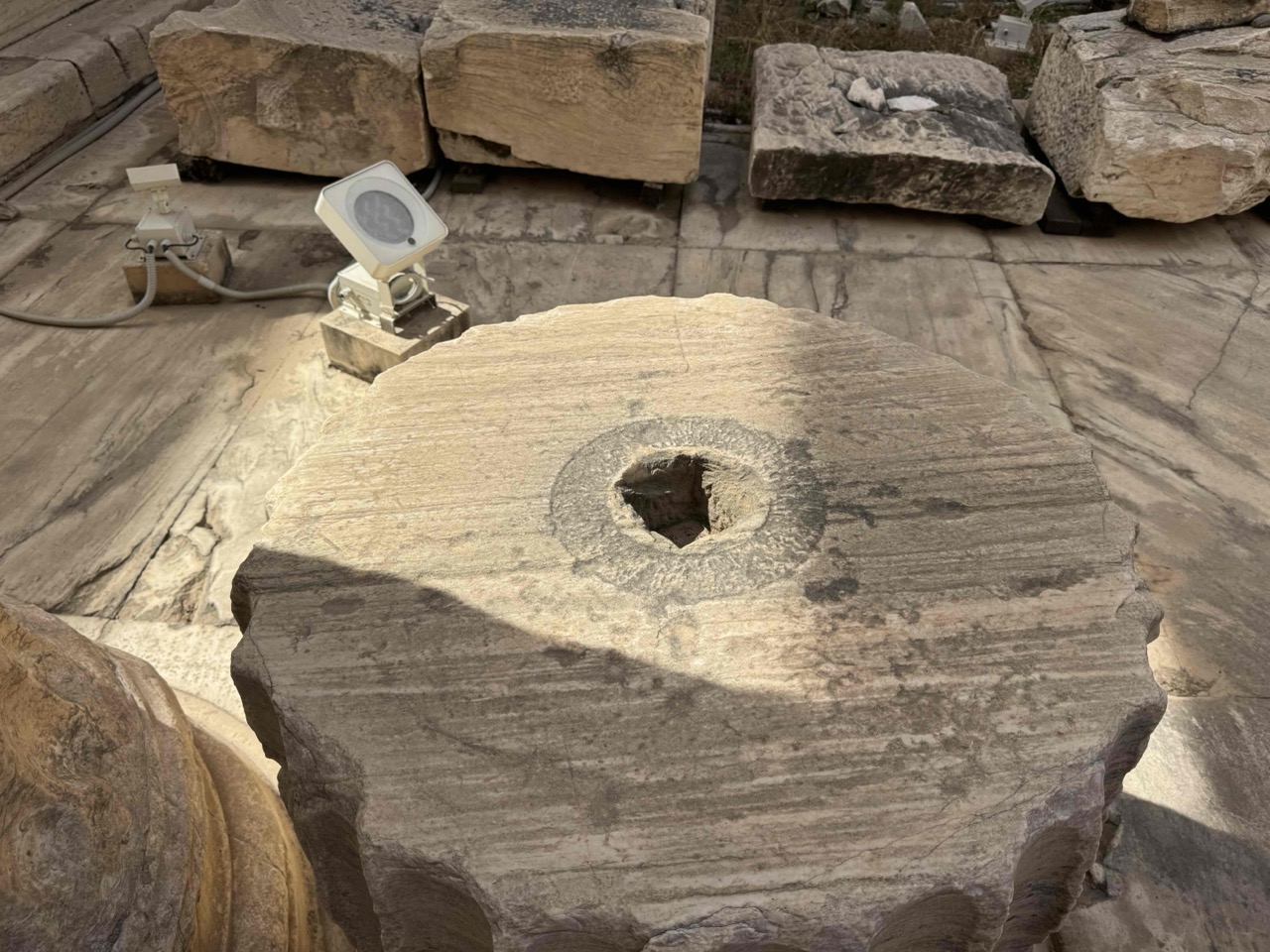
We were able to walk up a series of steps to arrive at the Parthenon, seeing how the 2 ton cylinders were assembled to create what appear to be seamless pillars. The connections between the cylinders were made through square openings that are carved into the stone with wood based pegs.
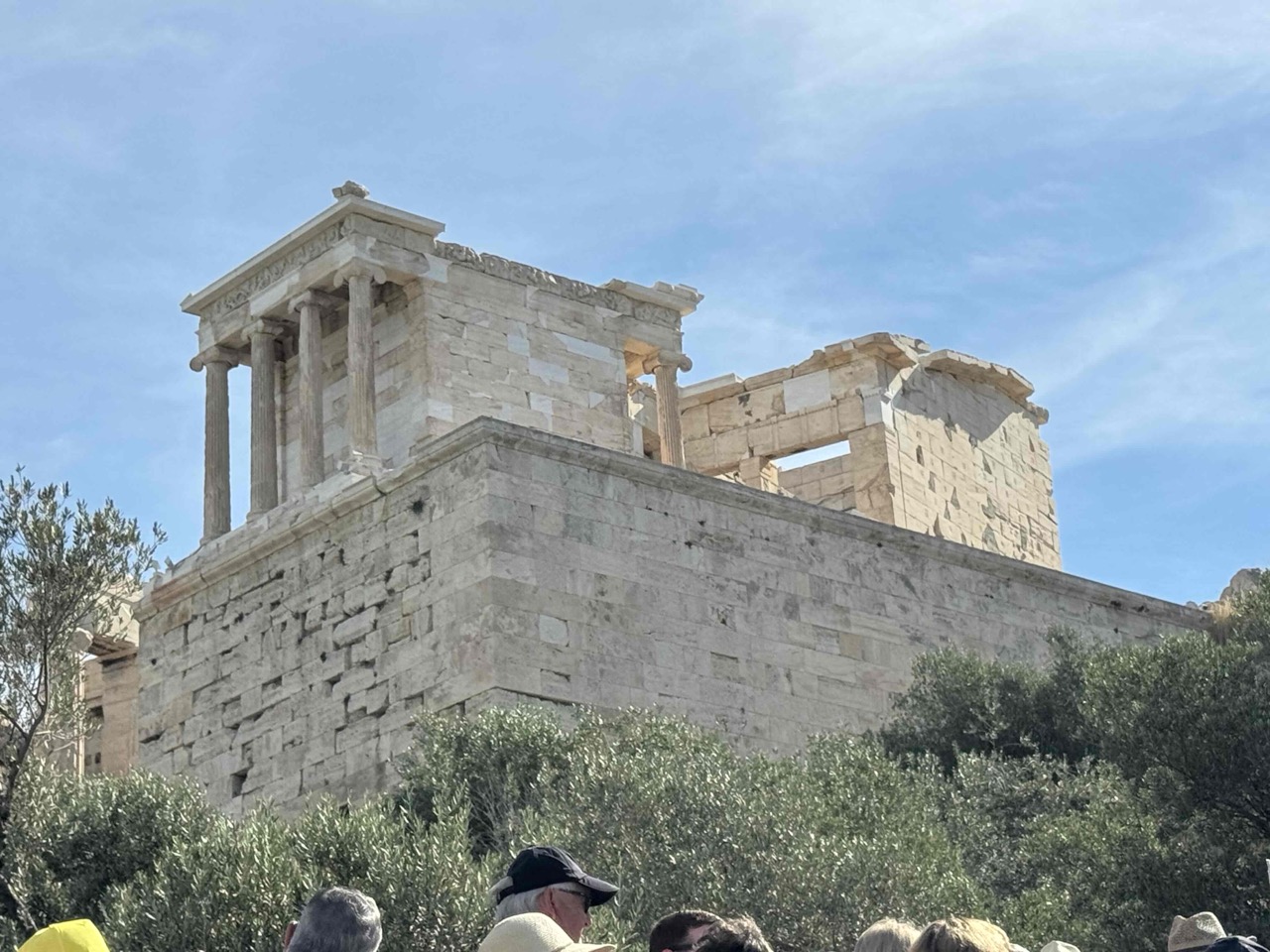
We saw the Temple of Athena Nike and the Temple of Poseidon, in addition to the Parthenon.
Shedia Project
The Shedia Project: We were introduced to this worthy cause in the afternoon. It is a social and environmental project that creates education and training for people who are homeless or live well below the poverty line. We were impressed with the paper houses in the lobby and the paper ships hanging from homemade lamp shades. Each represented an individual who was able to restart his or her life. Homelessness can become social exclusion at its most extreme. Beyond its social mission, Shedia is also a program that raises environmental awareness. Many for profit publications take unsold copies and dispose of them. Shedia participants use unsold magazines to make products like paper clocks, which support the phrase "reduce, reuse or recycle".
Afternoon and Evening
We were then given the afternoon off, so our dinner plans are to head up to the top of Lycabettus, the highest hill in Athens, at an altitude of 277 meters. We are hoping to see the Acropolis all the way to the port of Piraeus. Dinner is at Orizontes Restaurant
What's Next
Tomorrow we will be taking a 5-hr ferry ride from Athens to Naxos, to begin our island experiences.
— David